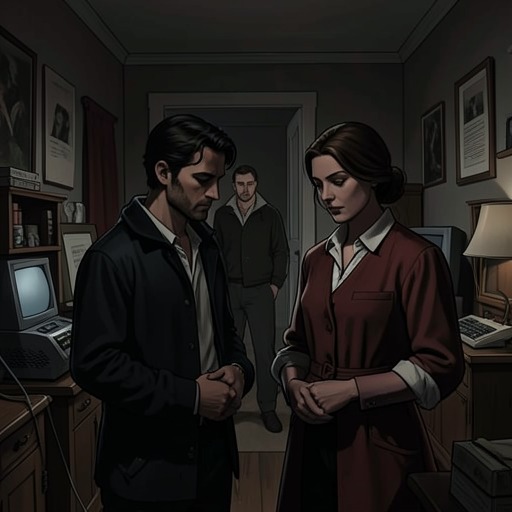
Marie
Narcissus and GoldmundMarie is the landlord’s daughter in the bishop’s city, a figure of modest but enduring attachment in Goldmund’s unsettled life. As a child, she had quietly cared for him on the morning he left; years later, she recognizes him before he recognizes her, welcomes him into her family’s home, and waits for him through the night after his dangerous visit to Agnes. Her loyalty is expressed less through declarations than through practical care: remembered hospitality, a meal, an open door, and a final farewell.
Identity and First Connection
Marie first enters Goldmund’s story as the timid daughter of the landlord who had given him shelter. On the morning of his departure, she warmed milk for him in the kitchen. Goldmund gave her a kiss, which she received quietly and solemnly, while she was saddened by his leaving. The encounter made little lasting impression on him at the time, and he did not think of her again.
When he returns to the city, Marie is a delicate, sickly young woman with beautiful dark eyes and a lame hip. She calls to him at the fish market and asks whether he remembers her. He does not; she has to identify herself as the daughter of his former landlord. Her embarrassment as she recalls the morning milk underscores the difference between their memories: for her, the brief farewell remained important, while for him it had disappeared into the succession of his travels.
Welcome After the Plague
Marie’s recognition gives Goldmund a personal welcome in a city altered by catastrophe. She brings him to eat with her parents in the room where his painting still hangs and his red ruby glass remains on the mantelpiece. The familiar objects preserve a small trace of his earlier stay, while the family’s invitation to remain for a few days gives him a temporary home. Goldmund is glad that someone in the city knows and loves him.
Through her family, Goldmund learns what has happened in Master Niklaus’s household during the plague. Niklaus survived, but Lisbeth fell gravely ill; her father nursed her and died a few weeks before she recovered. Lisbeth lived, though her beauty had been lost. The workshop stood empty, and Marie’s father suggested Goldmund might settle there and marry Lisbeth, reasoning that she would have little choice. This proposal belongs to the father, not to Marie, and the narrative gives no indication that she supports or acts upon it.
Waiting and Farewell
After Goldmund visits Agnes at the castle, he returns to the fish market near midnight expecting that nobody will be awake and that he may have to sleep outside. Instead, he finds the door open and Marie waiting in the kitchen by a tiny oil lamp. She has dozed off after waiting for hours, but springs up when he enters. Her vigil turns the house into a refuge at the moment his secret life has again put him at risk.
When Narcissus takes Goldmund away from the city, Goldmund asks to stop at the fish market. He looks toward the castle windows for Agnes but does not see her; he then bids farewell to Marie and her parents, thanks them repeatedly, and promises to return one day. Marie stands in the doorway until the riders are out of sight, then limps slowly back into the house. The farewell leaves her in the familiar position of the one who remains, while Goldmund resumes his wandering.
Narrative Significance
Marie’s recurring acts of hospitality form a quiet counterpoint to the instability of Goldmund’s life. Her care is concrete rather than dramatic: she remembers the boy who once kissed her, receives the stranger he has become, waits at the kitchen table, and watches him leave. The persistence of her limp marks a bodily continuity across the years, while the changed city and the long interval expose how much has happened beyond the limits of their brief connection.
The relationship is asymmetrical but not empty. Marie’s memory preserves a tenderness Goldmund had forgotten, and her welcome gives him a moment of belonging without asking him to abandon his freedom. Yet the story does not turn that attachment into a lasting union: Goldmund departs with Narcissus, and Marie returns indoors after the riders disappear. Her place in the narrative is therefore defined by a repeated pattern of welcome and separation, an intimate human continuity that cannot keep the wanderer at home.